Thursday, April 12, 2012

Veggie Sandwich

I like a really good sandwich from time to time.  This one, was really good.  Oozy egg yolk, flavorful and tangy goat cheese spread, roasted sweet potatoes...  this sandwich packs quite a punch.  It's one I will definitely be eating again soon!


Sun-dried Tomato Goat Cheese Spread
Recipe by Shannon

2oz goat cheese
1oz sundried tomatoes (not in oil*), roughly chopped
1/8t salt
2T parsley
1 garlic clove
~2t extra virgin olive oil
almond milk

Add goat cheese, tomatoes, salt parsley and garlic to the small bowl of a food processor.  Pulse until starting to combine, then add in olive oil.  Run for a little bit longer, then taste and adjust to taste with salt and pepper.  Process again, adding enough almond milk to achieve a spreadable consistency.  Store in the fridge.


For the sandwich...

Hearty bread (I used some Irish Soda Bread similar to this w/o raisins)
Sunny side-up or poached egg
Roasted Sweet Potato Rounds
Arugula
Sliced Red Onion
Sun-dried Tomato Goat Cheese Spread, see above
Avocado Slices (optional)


What is your favorite sandwich ingredient??

Tuesday, April 10, 2012

Pork Belly and Vegetable Pasta

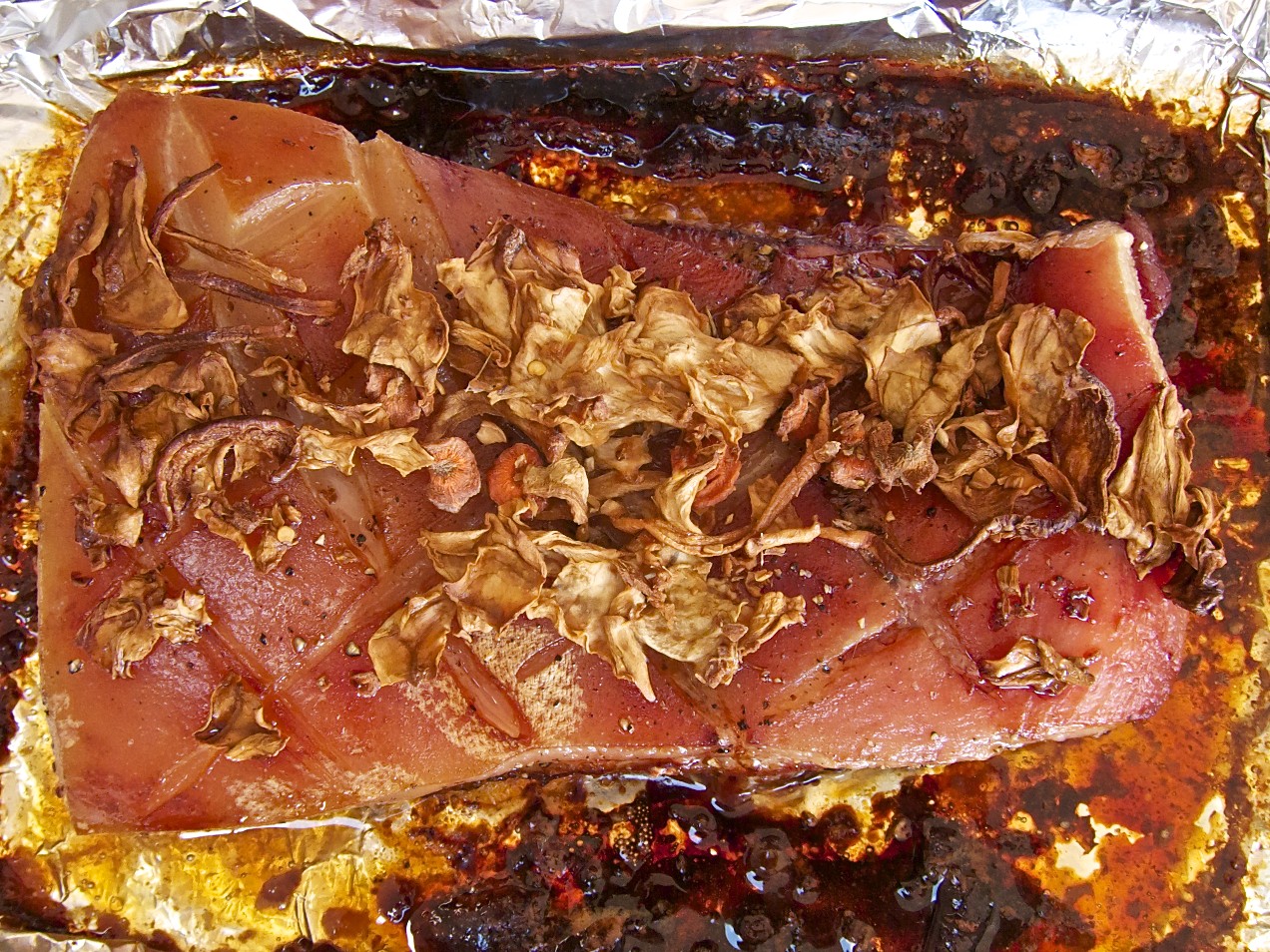
I wrote a recipe for Zester Daily about my latest, favorite dish, a pasta with pork belly meat, flavored by Vietnamese style pickled vegetables.

I love pork belly but not pork belly fat. 
The recipe is my attempt to split the difference. 
I let the fat tenderize and season the meat. 
The only part of the fat I put into the pasta is the thin crackling layer, that luscious bubbling, crispy top layer. 
The cracklings are ground up and sprinkled on the pasta to give a sweet crunch to the tender, moist meat.

The pickled vegetables add to the pork's deep rich flavors. Included in the pickling are pieces of ginger which brings a subtle heat to bear on the dish.

High methane levels in Arctic - April 2012

Below are two images produced with NASA GES DISC Giovanni data system, showing methane levels for early April 2012.

The top image shows where methane levels exceed 1.9 parts per million.


The image below is a polar projection; note the different scale on the right, which is the default one that is automatically calculated and exceeds 2 parts per million.


Below the same image as the above one, this time with the same custom scale as the top image. 


Below is an animation showing the recent surface temperature anomalies 
This animation is a 774 kb file and may take some time to fully load. 


Methane levels at Mauna Loa, Hawaii (directly below) and Barrow, Alaska (further down below). 


Tuesday Things

I love my new spice rack.


My absence of late can in part be due to these...  read in a total of 10 days.  Woops?

Excuse the cell phone picture (clearly not an iPhone!)

My cousins make some cute kids ;)  I was lucky enough to spend some time with them this weekend!


It was also a good year because my attempt at Babci's poppyseed bread came out better than last year!  You'll see it again soon, when I have time to type it up...


How did you spend your Easter/Passover weekend?

Highlights of EGU General Assembly 2012

If you will be attending the European Geosciences Union (EGU) General Assembly on April 25, 2012, make sure to attend, from 14:00 to 14:15 in room 23, the presentation:

Methane release from the East-Siberian Arctic Shelf and its connection with permafrost and hydrate destabilization: First results and potential future developments
by Natalia Shakhova and Igor Semiletov

The East Siberian Arctic Shelf (ESAS) is home to the world’s largest hydrocarbon stocks, which consist of natural gas, coal bed methane (CH4), and shallow Arctic hydrates. Until recently, the ESAS was not considered a CH4 source due to the supposed impermeability of sub-sea permafrost, which was thought to completely isolate the CH4 beneath from modern biogeochemical cycles.

However, the ESAS represents an enormous potential CH4 source that could be responsive to ongoing global warming. Such response could occur in substantially shorter time than that of terrestrial Arctic ecosystems, because sub-sea permafrost has experienced long-lasting destabilization initiated by its inundation during the Holocene ocean transgression. ESAS permafrost stability and integrity is key to whether sequestered ancient carbon escapes as the potent greenhouse gas CH4.

Recent data suggest the sub-sea permafrost is currently experiencing significant changes in its thermal regime. For example, our recent data obtained in the ESAS during the drilling expedition of 2011 showed no frozen sediments at all within the 53 m long drilling core at water temperatures varying from -0.6˚C to -1.3˚C.

Unfrozen sediments provide multiple potential CH4 migration pathways. We suggest that open taliks have formed beneath the areas underlain or influenced by the nearby occurrence of fault zones, under paleo-valleys, and beneath thaw lakes submerged several thousand years ago during the ocean transgression. Temporary gas migration pathways might occur subsequent to seismic and tectonic activity in an area, due to sediment settlement and subsidence; hydrates could destabilize due to development of thermokarst-related features or ice-scouring.

Recently obtained geophysical data identified numerous gas seeps, mostly above prominent reflectors, and the ubiquitous occurrence of shallow gas-charged sediments containing numerous gas chimneys, underscoring the likelihood that the ability of sub-sea permafrost to capture CH4 released from the seabed is failing.

Available data suggest the ESAS sub-sea permafrost is currently leaking a substantial amount of CH4. We propose that a few different types of CH4 exist, and are becoming involved in the modern carbon cycle due to permafrost destabilization in the ESAS: modern biogenic CH4 produced from ancient substrate, relatively old biogenic CH4 mobilized from hydrate deposits, and old thermogenic CH4 accumulated within seabed deposits. Isotopic data obtained by sampling CH4 in the water column and atmospheric CH4 in close proximity to the sea surface confirm the contribution from different sources, and demonstrate that the isotopic signature of CH4 from the ESAS can be used to create an interpretive plot for defining hydrates. CH4 fluxes could occur as numerous weak seeps, as large areas of strong bubble plumes, or as sites where CH4 releases are flare- or torch-like and the emissions are non-gradual.

Due to the shallow and oligotrophic nature of the ESAS, the majority of aqueous CH4 may avoid biological oxidation in the water column and escape to the atmosphere.

Further investigations should be focused on quantifying the total CH4 pool of the ESAS, improving our understanding of the mechanisms responsible for sub-sea permafrost destabilization and gas migration pathways formation, and decreasing uncertainties regarding the current CH4 emission mode and its future alteration by progressing permafrost degradation.

Geophysical Research Abstracts
Vol. 14, EGU2012-3877-1, 2012
EGU General Assembly 2012

Above presentation is part of the session:
Methane cycling in marine and terrestrial systems
which also features, as part of the poster program:
Display Time: Wednesday, 25 Apr 08:00–19:30
Attendance Time: Wednesday, 25 Apr 17:30–19:00
Poster Area BG

First drilling subsea permafrost in the southeastern Laptev Sea, the East Siberian Arctic Shelf: results and challenges
by Igor Semiletov, et al.
highlighting the following two challenges:

1) observed Arctic warming in early 21st century is stronger than predicted by several degrees, which may accelerate thaw release of methane from the upper seafloor layer by increasing bottom erosion and from deeper stratums (including hydrates) by sediment settlement and adjustment;

2) drastic sea ice shrinkage causes increase in storm activities and deepening of the wind-wave-mixing layer down to depth ~50 m that enhance methane release from the water column to the atmosphere.

Geophysical Research Abstracts
Vol. 14, EGU2012-3913, 2012
EGU General Assembly 2012

Wednesday, April 4, 2012

NSDIC Arctic Sea Ice News & Analysis April 4, 2012

The National Snow and Ice Data Center (NSDIC) has released an update of its Arctic Sea Ice News & Analysis (April 4, 2012). 

Ice age data shows thin ice cover

Ice age data this year show that the ice cover remains much thinner than it was in the past, with a high proportion of first-year ice, which is thin and vulnerable to summer melt.

After the record low minimum of 2007 the Arctic lost a significant amount of older, thicker ice, both from melting and from movement of ice out of the Arctic the following winter. In the last few years, the melt and export of old ice was less extreme than in 2007 and 2008, and multiyear ice started to regrow, with second and third-year ice increasing over the last three years.

After the near-record melt last summer, second-year ice declined again, but some of the ice that had survived the previous few summers made it through another year, increasing the proportion of third- and fourth-year ice. However the oldest, thickest ice, more than four years old, continued to decline.

Ice older than four years used to make up about a quarter of the winter sea ice cover, but now constitutes only 2%. First-year ice (0 to 1 years old) this year makes up 75% of the total ice cover, the third highest at this time of year in the satellite record. In 2008 the proportion of first-year ice was 79%, and in 2009 it was 76%.

Rapid Arctic warming is altering the course of the jet stream

NSDIC also points at a study by Jennifer Francis of Rutgers University and Steve Vavrus of the University of Wisconsin that suggests that warming in the Arctic is causing weather patterns in mid-latitudes to become more persistent. This persistence can lead to conditions like heat waves, cold spells, drought, flooding, and heavy snows. The researchers found that as temperatures in the Arctic warm and become closer to temperatures in lower latitudes, the waves of the jet stream tend to spread out, and west-to-east winds slow down in the upper level of the atmosphere (where storm tracks form). Both of these effects tend to slow the progression of weather patterns, which means that a weather pattern, whether hot or cold, is more likely to stick around.

Tuesday, April 3, 2012

Soup's On!

As soon as the temperatures dropped after the week of beautiful weather, I immediately craved soup.  How about a two-fer to make up for the scarcity of my online presence the past few weeks?


First up-- a garlic-infused soup reminiscent of a stuffed baked potato.  Hearty and creamy (w/o the cream), load up the toppings and dig in!!


Baked Potato Soup
adapted from Smitten Kitchen (& Cook's Illustrated Garlic Potato Soup)
Serves 4

1/2-1 head of garlic (whatever you have on hand)
1T butter
1T extra virgin olive oil
1/2-3/4c thin sliced leeks, just use the white and light green parts (or shallots, if you can't find leeks)
5-6c low-sodium broth (chicken or veggie)
2 bay leaves
3/4t sea salt
2-2.5lb potatoes (I used PEI potatoes, but Russets would be a good choice)
1/2c greek yogurt (2% recommended)
freshly ground black pepper

topping suggestions:
thinly sliced scallions or chives
crumbled bacon
grated cheddar or gruyere
salsa
sauteed mushrooms
anything goes ;)

Rinse a head of garlic (or the half you have left, in my case) to remove any dirt.  Cut the top third off the head of garlic as well as right along the base (with the roots).  Remove any loose papery skins.  Pop out the top thirds of the cloves and mince them.  Take the bottom two thirds and make a bouquet garni in a square of cheesecloth with the bay leaves.  Tie the ends of the cheesecloth together to form a sachet.

Melt the butter in a heavy pot or dutch oven over medium heat.  Add the oil and leeks and cook until soft, ~5min.  If you walk away and come back to some browned butter, don't worry, the soup will still turn out ;)  Add the minced garlic and cook 1min.  Add broth, bouquet garni and salt.  Bring to a boil, then reduce heat and simmer 40min, until garlic in the bouquet is very tender.

While the broth is simmering, chop your potatoes to 1/2" dice.  Whether you peel them is up to you, I tend to leave them on, both for taste and nutrition.

Add potatoes and simmer, partially covered for 20min, until the potatoes are tender.  Remove the bouquet garni and remove from the heat.  Stir in greek yogurt and then using an immersion blender (or blender or food processor) puree to your desired consistency.  I went for a slightly chunky soup and only pureed about half.  Taste and adjust seasonings with salt and pepper.  Serve with your desired toppings.


~~~~~

Can you believe that I'd never had French Onion Soup until I made it myself?  Anything with caramelized onions has my name all over it, so when my roommate made some homemade beef stock, I decided it was finally time.


French Onion Soup
adapted from Smitten Kitchen
Serves 4-6

~2lbs yellow onions, thinly sliced
2T unsalted butter
1T extra virgin olive oil
1t salt
1/4t evaporated cane juice (or granulated sugar)
3T white whole wheat flour
2 cloves garlic, minced
dash worcestershire sauce
dash reduced sodium soy sauce
~1t dijon mustard
1/2c dry white wine (or dry white vermouth)
4c homemade beef stock
4c homemade veggie stock
freshly ground black pepper

for garnish
thinly sliced baguette
finely grated gruyere

Melt butter and oil in a large dutch oven over medium low heat.  Add the onions and stir to coat.  Cover the pot and reduce the heat to low.  After 15min, turn the heat to medium low and uncover the pot, add salt and sugar and stir to combine.  Cook onions for 30-40min, stirring frequently, until the onions are a deep golden brown.

Once the onions have caramelized, sprinkle them with flour and cook for a few min, stirring.  Add the wine, garlic, soy and worcestershire sauces and dijon mustard.  Add both stocks, a little at a time, stirring between additions.  Season to taste with salt and pepper.  Bring to a simmer and continue to simmer, partially covered for 30-40min.

Meanwhile, preheat the oven to 325deg.  Arrange ovenproof bowls or crocks on a baking sheet.  If you're going for appetizer-sized portions, 6 will do.  Ladle soup into each of the crocks and then top with a slice (or two) of baguette and the finely grated gruyere, how much is up to you ;)  To finish, bake the soup for 20min or so, and then broil a few more minutes so the cheese gets bubbly.  Serve immediately, with pot holders!

I should note that the soup is delicious in its own right (without the melty cheese on top), and my next version might use a hearty mushroom stock to make a vegetarian version!


Hopefully soup time is coming to an end, I'm ready for asparagus and peas and rhubarb and...  strawberries!!    What's been going on in your kitchen lately??