Sunday, April 19, 2009

Brie!

Wow, I've been meaning to write this post for so long! But I just got to try out the recipe I had in mind, so it's finally time :) First I need to give a huge THANK YOU to Alex at Ile de France for giving me the opportunity to try their cheese!! I almost went with goat cheese, since I love it so, but decided to go for something i don't get very often--brie. I'm not well-versed in how to discern a high-class brie, but I do know that this was mighty tasty. It had a nice, uniform white rind and a creamy, mild taste. It sure did melt beautifully!! Here's what I have done with it so far...


First up were some amazing grilled cheeses (April is National Grilled Cheese month after all). The first used a nice ciabatta roll with some sliced grilled chicken breast and avocado slices. The brie almost disappeared into the bread, so luscious! I meant to add some dijon or grainy mustard, but forgot when it came time for assembly.


Next was a Black Forest Grilled Cheese (although normally "black forest" conjures images of chocolate and cherries, this name stuck in my head when I came up with it!). For this sandwich I topped a nice russian rye with oats with some brie, deli ham, and spiced sour cherry spread. Holy moly this knocked my socks off!!! The spiced cherry spread was not homemade, but needs to be recreated as soon as it's sour cherry season! The ingredient list included: cherries (both fresh and dried), burgandy wine reduction, ginger, lemon juice and "spices". SO good.


The last recipe I have to share is for a Nutty Quinoa w/Brie, Asparagus & Sundried Tomato Pesto. I wanted something a little different to submit to the Ile de France recipe contest (click for details, you have until the end of the month to submit a recipe!).


Nutty Quinoa w/Brie, Asparagus & Sundried Tomato Pesto
Recipe by Shannon
Serves 1 as a main dish, 2 as a side


Feel free to use more or less asparagus or brie, another spring veggie, or different whole grain in this dish, depending on what you're feeling at the moment (or have in your kitchen)!

1/2 bunch asparagus, trimmed and rinsed
1-2T lemon-flavored olive oil
s/p
1/2c quinoa
1c water
1oz brie, diced
2T Sundried Tomato Pesto, see recipe below

Preheat oven to 450deg. Toss asparagus with oil, salt and pepper, then transfer to baking sheet. Roast asparagus for ~20min, or until desired doneness. Cut asparagus into ~1" pieces (I left some pieces for garnish)

Toast quinoa in a dry pot over low or med-low heat until it begins to pop. Keep an eye on it to prevent burning. Once toasted, add water and continue to cook over med-low heat for ~20min or so. The quinoa is done when you start to see 'tails' separate from mostly clear grains. Fluff quinoa with a fork, then mix in brie, asparagus and pesto. Transfer to serving dish and top with whole asparagus spears, if desired.

Sundried Tomato Pesto
Recipe by Shannon

This can be adjusted to suit your tastes-- I almost included some basil or other seasonings, mushrooms, and parmesan cheese.

10 sundried tomato halves
2T chopped walnuts
2-3T extra virgin olive oil

Pulse tomatoes and walnuts in food processor until crumbly and combined, then drizzle in enough olive oil for the mixture to come together.

Rosemary Fried Chicken

What a beautiful day! Perfect for taking a walk at the beach, shopping at our local farmers' market, cooking, and eating outside.

We've cleaned off the deck. Arranged tables outside for lunch. Prepared a carrot salad and a couscous with grilled vegetables, made kosher pickles and a pasta with braised beef and watercress, soaked chicken and onion rings in buttermilk for fried chicken, and baked a custard with chocolate.

Today will be a good day.

For me the fried chicken with onion rings is the centerpiece of the meal. I have strong childhood memories of my mom making fried chicken when we went to Will Rogers State Beach in Santa Monica. Nothing Colonel Sanders ever made came close.

Rosemary Fried Chicken

Yield: 4 servings
Time: 45 minutes to prepare, marinate the chicken overnight in buttermilk

Ingredients

1 whole chicken, washed, cut apart, wing tips and bones reserved to make chicken stock
1 quart buttermilk
4 cups flour
1 teaspoon sea salt
1 teaspoon pepper
1/4 cup finely chopped fresh rosemary leaves
1/4 teaspoon cayenne pepper (optional)
1/4 teaspoon sugar (optional)
1/4 cup finely chopped yellow onion (optional)
2 tablespoons olive oil
2 quarts safflower or canola oil

Method

When you cut up the chicken, separate the two parts of the wing and cut the breast meat off the bone. Keep or discard the skin as you wish. The breasts can be left whole but will cook more evenly when cut into strips or tenders.

Toss the chicken pieces with olive oil and season with sea salt and pepper. Put the pieces in a container, add the buttermilk, 1 tablespoon of the rosemary, stir, cover, and refrigerate overnight.

Using a wok or deep frying pan, heat the cooking oil to 325 - 350 degrees or until a piece of parsley browns immediately when dropped in the oil. Before you begin cooking, prepare your counter. Have a slotted spoon or an Asian style strainer ready. Lay two paper towels on top of a piece of brown grocery bag paper on a large plate.

Reserve 1 teaspoon of the rosemary to use just before serving.

In a brown paper bag mix together the flour, sea salt, pepper, rosemary, cayenne (optional), sugar (optional), and onions (optional). Remove one piece of chicken at a time. Shake off the excess buttermilk, drop it into the paper bag with the seasoned flour, close the top of the bag, and shake. Repeat with all the pieces, assembling them on a plate or cutting board.

Cook the chicken in batches. Gently drop each piece into the hot oil, making sure it doesn't don't touch the other pieces so each one cooks evenly.

Turn over when browned on one side. Remove when golden brown and drain on the paper towels. The pieces will cook quickly: chicken tenders (breast) 2-3 minutes; wings 7-8 minutes; thighs & legs 10-12 minutes.

Just before serving, lightly dust the chicken pieces with 1 teaspoon of rosemary, sea salt and pepper.

If you are making deep fried vegetables like onion rings or broccoli florets, they cook even more quickly: thick rings cook in 30 seconds, thin rings in 5-6 seconds; broccoli in 30 seconds. Soak the vegetables in the seasoned buttermilk for a few minutes, then process like the chicken pieces.

Thursday, April 16, 2009

Jicama & Butternut Salad

**Sorry for the repost, but I added a bit about jicama since so many of you asked! See the bottom of the post**

Well, I have been so busy I've been doing very little cooking :( All these ideas floating in my head for brie and herbs, and no time to implement them! Mom even had everything all set for Easter, all I got to do was throw together a mousse parfait for dessert :) I'm not complaining, and it was Easter bunny-approved!


This was really simple--I took the cupboard shortcut of some boxed mix (strawberry and lemon mousse) and fruit in the fridge (mom stocked up, she knows me so well!!) to create a nice dessert for our dinner. I crumbled up a gingersnap on top for a little crunch.

Right, so you're wondering about the title of the post?!? I did have a chance to throw something together that was fun and exciting... A combination of textures and flavors that really seemed to come together. I combined some maple, chipotle-roasted butternut squash with crisp jicama, then topped it with some roasted pecans and dried fruit. Yum!


Jicama & Butternut Salad
Recipe by Shannon


1 small jicama, cut into matchsticks
bulbous end of a butternut squash
maple syrup
cayenne pepper
salt
1-2T chopped toasted pecans
~2T dried cranberries (I had a mix with dried cranberries, cherries, pomegranate seeds, raspberries and boysenberries--from Trader Joe's)

Preheat oven to 450degrees.

Cut butternut squash into half rounds and toss with enough maple syrup to coat (I didn't measure but it was prob ~2T for a big squash). Season with salt and cayenne pepper (use your judgement for amounts on this one!). Roast at 450degrees until nice and roasted, flipping after ~15min or so.

Combine jicama and roasted butternut on a plate, then top with toasted pecans and dried cranberries. Dig in!


Sorry for the lack of accurate measurements, but I was just flying by the seat of my pants! I am SO happy that tomorrow is Friday, anyone with me??


What is jicama you asked? It goes by Mexican potato or turnip, but I can assure you it tastes nothing like a turnip! Jicama is the edible root of a poisonous vine called yam bean (which the root can also be referred to). Nutritionally speaking, it's a great source of fiber, Vitamin C, and water (it's 85-90% water). Jicama is mildly sweet (from inulin) but doesn't have an overpowering flavor. Crisp and crunchy, it is great to much on its own or to use in salads... I have yet to try it cooked though!

Other jicama recipes I've featured
Jicama Fall Slaw
Shrimp, Jicama & Mango Salad
Grilled Corn, JIcama & Mango Salad

Monday, April 13, 2009

Off Season Bargains in the Sonoma Wine Country

Spring is the perfect time for an off-season weekend in California's Sonoma Valley. Premium rates don't begin until just before the Memorial Day weekend.

Off-season extends from the end of harvest in November through mid-May. In December, January, and February there can be a bit of rain, which is good for the grapes. Even for visitors, the inclement weather adds to the valley's charms, especially with so many restaurants serving comfort food and great wines.

During March and April, day time temperatures hover in the mid 60's to low 70's, with the nights still in fireplace-cozy mid-40s. Only a few buds appear on the vines, but brilliantly colored wild flowers are already in full bloom.

Fields of bright yellow mustard plants spread as far as the eye can see. Tall green grasses wet from the coastal air surround mile after mile of still dormant, grape vines. The lifeless looking vines mask the vitality that will burst forth as the day time temperatures climb into the 70's.

To attract visitors, you'll find many hotels have lowered their room rates during the off-season. The Sonoma County Tourism Bureau's web site is a good guide to lodging, restaurants, and recreational opportunities. Calling around you'll discover who has discounted their rates.

Recently we enjoyed a long weekend with family and friends in Glen Ellen. We much prefer to stay in a rental home rather than a hotel. We have more privacy that way and because we can make our own meals, we save money in the long run.

With four couples we rented a house offered by Beautiful Places. The off-season rate for our weekend stay at Villa Andrea was discounted 20%. At some of their properties, stay three days and the fourth day is free.

Besides saving money, you'll also have a more relaxing time. Right now, you'll have Sonoma, Petaluma, Glen Ellen, Santa Rosa, Kenwood, Healdsburg, and Sebastopol and all their wineries pretty much to yourself.

With only light traffic on the main roads, there are no lines in the tasting rooms at popular wineries like the Benziger Family Winery, B.R. Cohn, Loxton Cellars and Tin Barn Vineyards. Fewer visitors means a wine maker like Bob Benziger has time to talk about the wines and even lead some of the tram rides through the vineyard himself.

Summer in Sonoma is glorious. But after this trip we discovered the pleasures of an off-season visit. We had better access to the wine makers. We had more leisure time because we weren't stuck in traffic jams and we were happy about spending less.

Saturday, April 11, 2009

Easter Babka

Wow, what a week! I am busy trying to come up with some good recipes for my brie and herbs, so I am withholding from you guys ;-) Don't worry, I'm not leaving you empty handed in this post--I made you some bread!


This one is another family recipe, a traditional Babka, that makes excellent ham sandwiches!

My great grandmother was quite the cook and baker, but she lacked a knack for formal recipes. When it came time to make this bread, I had 3 of her recipes in front of me, all of them a little different :) Different amounts of butter or different ways of combining the ingredients, I tried to use my intuition but I think i'd make a few adjustments next time (i'll note them in the recipe below). This is a basic sweet dough, that can be used as the base of Poppyseed or Date Bread (which were also staples at our table). I haven't tackled those yet though, one thing at a time!

After the second rise

Babka
adapted from Babci's recipes


1c milk (I used Lactaid)
1/2c butter (I used salted here)
1/2c sugar
1t salt (increase if using unsalted butter)
2pkg yeast
1/2c warm water
scant 1T sugar
4-6c AP flour
1t grated lemon peel (can use dried lemon peel)
2 eggs, beaten
1/2c raisins (more if you want it to be more of a raisin bread)


In a small pot, combine milk, butter, 1/2c sugar and salt. Heat on low until butter has melted and sugar has dissolved. Remove from heat and let cool to lukewarm. This is important, you don't want to kill your yeast (I did this at Christmas time... oops!).

Sprinkle yeast on warm water in a small bowl and add 1T sugar. Let stand ~5-10min (or more), it should be bubbly!

In the bowl of a mixer, add cooled milk mixture and beat little bit so it is well combined, then add the eggs and mix. Add 2c flour, lemon peel and raisins, beat well. Mix in the yeast. At this point you can change to the dough hook and knead in the bowl, or do it by hand. I chose to do most of it with the mixer (the dirty part) and finished it off by hand, on a floured surface. While kneading, add in enough flour so the dough starts to come away from the bowl and becomes smooth and no longer sticky. Place in a greased bowl, cover and let rise in a warm place until at least doubled.

Punch dough down after 1st rise. If you're making loaves, you can shape them however you want. If you were making Poppyseed Bread or other filled loaf, you would roll it out at this point and fill it accordingly. Let rise again 1.5-2hrs. Before baking, you can do an egg wash (I forgot for the first one, did for the second). Bake at 350deg for 30min + (depending on the size). The round free-form loaf I made took ~35min, while the tall one was done at 30min. They're done when they sound hollow when tapped. Then try really hard not to cut it before its cooled :)


Anyone else see someone smiling at you??

I've been so busy at work this week I'm behind on my blog reading, but I did come across a few contests... if you have any interest in Bob's Red Mill products, Barney Butter (just don't do this with it!!!), Everybody's Nuts, Mix My Granola, Zesty clothing, Jocolat and Glo bars, Honest Foods, or a Navan Foods gift certificate, you'd better get clicking! Phew, my fingers are tired, time to go rest :) Have a great weekend everyone!

Thursday, April 9, 2009

What to Do With All Those Easter Eggs? Make Egg Salad and Custard

With Easter only a few days away, who isn't thinking about eggs? When I was a kid I loved dyeing and decorating eggs. But instead of using hard boiled eggs, I thought it was infinitely cooler to de-egg my Easter eggs.

I remember using one of my mother's sewing needles to punch holes on either end of the uncooked egg. Putting my mouth against the egg, I'd huff-and-puff and blow until the raw egg dropped into a bowl.

Admittedly that was a lot of extra work and there were risks. Making the holes and blowing into the egg could crack the shell. Worse, all that huffing-and-puffing sometimes led to hyper-ventilating, so my mother kept an eye on me, just in case I got dizzy and fell off the chair.

In my child's mind, that extra effort was worth it because the feather-weight shells, brightly dyed and covered with decals, were so much more artful than the heavy hard boiled eggs.

So the raw eggs wouldn't go to waste, my mom made omelets or used them for baking. Ultimately I stopped making the feather-weight eggs. They were just too much trouble. When I reverted to using hard boiled eggs, she'd turn those into egg salad.

Egg Salad with Crispy Bacon

The egg salad will taste better if you use the freshest eggs available. We're lucky to live near the Santa Monica and Pacific Palisades Farmers' Markets where Lily's Eggs sells their eggs. The yolks are bright orange, the whites clear and silky, the flavor naturally sweet.

Yield: 4 servings
Time: 40 minutes.

Ingredients

4 eggs, farmers' market fresh
1 tablespoon Italian parsley finely chopped
1 tablespoon capers, finely chopped
1 large shallot, peeled, finely chopped
1 slice of bacon, crisp, finely chopped
1 1/2 tablespoons mayonnaise
Sea salt and pepper
Olive oil

Method

In a saucepan cover the eggs with water and gently boil for 30 minutes. That may be longer than you're used to but cooking the eggs at a lower temperature makes the yolks moist and flaky.

Let the eggs cool, then peel and chop them by hand with a chef's knife. Mix together the eggs, parsley, capers, shallot, bacon, and mayonnaise. Season with sea salt and pepper to taste.

Serve with bread, crackers, or hearts of romaine.

The Easiest Custard You'll Ever Make

Yield: 4-6 servings
Time: 90 minutes

Ingredients

2 eggs
1 cup heavy cream
1/2 cup
1 teaspoon vanilla (optional)
1 teaspoon sweet butter

Method

Preheat the oven to 350 degrees. Beat together the eggs and 1/2 cup white sugar. Add the cream and (optional) vanilla and stir well.

Butter a large 8" round oven-proof baking dish or 6 porcelain ramekins. Pour in the custard. Prepare a water bath by pouring 1" of water to a large roasting pan.

Put the custard into the water bath and bake for 45 minutes (the ramekins) or 75 minutes (the baking dish). Every 15 minutes rotate the baking dish and ramekins so they cook evenly. If the custard is browning too quickly, lay a piece of tin foil over the top.

The custard is done when it doesn't jiggle when moved.

Serve at room temperature with whipped cream, ice cream, or fresh berries.

Variations

Add 1/4 cup golden raisins, roughly chopped

Add 1/4 cup dry roasted almonds, walnuts, pistachios, or hazelnuts, roughly chopped

Add 1/4 cup high quality chocolate, roughly chopped

Add 1/4 cup espresso, reduced to 1 tablespoon

Add both the nuts and chocolate

Add the nuts, chocolate, and reduced espresso

Doha, Qatar

I highly recommend traveling to places you think you know because you've read about them or seen them in movies. The experience is eye-opening. You'll learn almost as much about yourself as you will about the destination. This is the last post from my Seattle to Doha trip, written for Peter Greenberg's travel site.

Off the Brochure Guide: Doha, Qatar
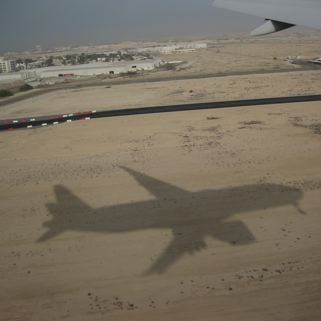
Plane ShadowDavid Latt traveled from Seattle to Qatar on the delivery flight of a new 777-200LR that would join Qatar Airways’ fleet.
In his final installment of the Qatar Chronicles, he reports on his findings both on and off the brochure in the capital city of Doha.
THE STORY OF QATAR
Qatar occupies an elongated peninsula on the eastern edge of Saudi Arabia. Jutting into the Persian Gulf, the landscape is dominated by flat, sandy expanses.

A self-described moderate Muslim country, religion and politics are as tightly interwoven in Qatar as anywhere else in the Middle East. There may not be Saudi-style religious police patrolling the streets, but this is not relaxed Dubai or Cairo.
Visitors to Qatar are told to enjoy their pleasures “modestly.” Women are asked to cover their arms in public. Drinking alcohol is forbidden except in licensed venues. Even the Qatar Tourism and Exhibitions Authority alerts visitors that public displays of affection between men and women are discouraged.
Most of the 1.2 million inhabitants of Qatar live in and around Doha. Only a few decades ago, Doha was a small fishing and pearl-diving village. Historically, there weren’t compelling reasons to travel to Doha: It was not at the nexus of trade routes; no ancient archaeological sites declared Doha as an important city in the ancient world; cruise ships rarely stop in Doha, the capital and main port, preferring instead to call at Bahrain and Dubai.
But the discovery of oil and immense natural gas reserves changed Qatar’s future. In a few decades energy development has made Qatar one of the richest per capita countries in the world.
The transformation of Doha from a sleepy, backwater village into a dynamic modern urban center was the vision of one man, the Emir of Qatar, Sheik Hamad bin Khalifa al-Thani. He assumed the leadership of the country in 1995 when he deposed his father as Emir.
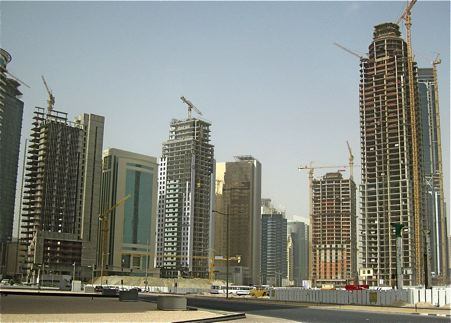
Doha SkylineFrom the beginning of his reign, Sheik Hamad had big plans for his country. Rejecting narrow parochial interests, he used Qatar’s vast wealth to make Doha an important center for Middle Eastern life.
Today, the business of Doha is business: New medical buildings, universities, condominium developments, business complexes, shopping centers, sporting arenas, hotels, and spas rise up before your eyes. Driving through town it’s easy to fool yourself into believing that literally every single building is under construction.
Sheik Hamad is also a master of balancing the interests of the Arab world on one hand and an alignment with the Western democracies—particularly the U.S.—on the other.
In 1996 he created Al Jazeera, a global television network devoted to putting an Arab perspective on the news. In 1997 he gave women the right to vote. In 2006, Qatar hosted the Asian Games, and in 2008 he donated the land for a Catholic church. He supports Palestinian causes, at the same time he allowed the U.S. to establish a large military base outside of Doha. After Hurricane Katrina, he donated $100 million to New Orleans.
And last, but certainly not least, the Sheik has also been the driving force behind upgrading Qatar Airways into a premium airline, expanding its routes to the major cities in the Middle East, Asia, Europe, and the U.S., with non-stop flights to New York, Washington D.C., and now, Houston.
GETTING THERE AND AROUND
Qatar Plane landedSeveral airlines fly to Doha, but Qatar Airways is generally the most accessible. Doha is its hub, so there are frequent flights to most parts of the world, including the U.S. From personal experience I can say that the planes are new and very comfortable, especially in business class. The food is first-rate. The flight crews are friendly and solicitous, qualities that are to be prized.
Once you get there, traveling around Doha isn’t easy. There are only a few taxis and renting a car isn’t advisable. Although the actual roads in Doha are good, there is so much construction, detours make a simple trip incredibly complicated. If possible, share the cost of a driver with friends. Check with your hotel’s concierge for recommendations.
DRINKING AND DINING AND SPAS

Unfortunately for most visitors, Doha is an expensive city. Many expatriates come to work in Qatar hoping to save a good deal of their salaries, only to discover that they can barely pay for housing and eat out occasionally. Gasoline and natural gas are very inexpensive but that doesn't off-set the cost of other necessities.

The major hotel chains are represented in Doha: Marriott, Four Seasons, InterContinental, Movenpick, Ramada, Starwood, Ritz-Carlton, Sheraton, and Sofitel. Room rates are comparable with those in London, Paris, and New York.
Most visitors to Doha eat in the hotels where the food can be very good but, again, very expensive. A delicious group dinner at Il Teatro at the Four Seasons cost a small fortune.
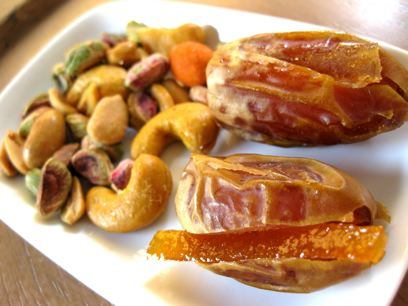
Stuffed DatesBesides dates and hammour—a delicious white fish that we ate as often as it was on the menu—very little food is produced locally. With poor soil and scorching heat in the summer, Qatari agriculture is a contradiction in terms. Top soil imported from Iran, Syria, and Jordan has improved the situation so that Qatar is now able to produce about 20 percent of its leafy vegetables.
For Arabic food in an upscale setting, the Al Liwan in Sharq Village & Spa operated by the Ritz-Carlton, serves a Lebanese buffet in an airy dinning room next to the pool. With the only sushi bar in town, Asia Live in the Doha Marriott features Japanese and Chinese dishes. The Doha Marriott also serves Indian seafood at Taj Rasoi.
For less expensive Indian food, catering to the many expats from the subcontinent, Bukhara in the Khalifa Tennis & Squash complex has a full menu including tandoori chicken. Za Moda at the InterContinental has a wood-fueled oven and turns out a pizza that would make any Italian proud.
For the most part, hotel restaurants are the only places in town to have alcoholic drinks. Many hotels like the Movenpick Towers are dry, so if you want a glass of wine or a cocktail, you have to go across the street to the Four Seasons.
Omara Sweets & RestaurantAn advantage to being in a Muslim country is the wide availability of fresh fruit juices. At the Al Liwan, for example, we were offered freshly made watermelon, mango (delicious!), pineapple, papaya, melon, mint-lemonade (another favorite), apple, orange, and grapefruit juice.
Although much of the affordable food in Doha is limited to McDonald’s and Burger King, you can find reasonably priced grilled meats and Arabic mezze—falafel, hummus, olives, pickles, yogurt, mutabbal or babaghanoush, labneh, etc. Head to restaurants in the Souq Waqif such as Al Bandar and Al Tawash, the Lebanese restaurant Assaha on Hamad Al Kibir Street or Turkey Central Restaurant in the old downtown area.
Though not easily accessible, good eats can also be found in a block-long stretch of storefront restaurants on the access road that runs parallel to Sheik Khalifa Street, just behind Al Jazeera. Besides McDonald’s there were also candy stores, bakeries, and rotisserie chicken shops.
At Al Omara Sweets & Restaurant, I had the best falafel I’ve ever eaten. Made fresh, the falafel was crunchy outside, studded with sesame seeds, and soft as a pillow inside.
Spas in a desert climate seem especially soothing. As you would expect, the best spas are at the luxury hotels. The Ritz-Carlton has spas at both of their hotels, as do the Marriott and the Four Seasons. A massage costs roughly what it does in the U.S.

I had a massage at the Six Senses Spa at the Sharq Village & Spa. You begin to relax in the waiting room which is shaded from the harsh sun outside. You are further soothed by the pool of water in the center of the room. After the massage therapist confirms what kind of treatment you'd like, you're led into the changing rooms. Supported by aromatic oils and heated towels, the massage itself was refreshing and therapeutic. After the treatment you are invited to spend as much time as you'd like in a quiet room where the chaise lounges face an inner courtyard with another pool of water. A cup of hot mint tea, a bottle of ice cold water and a tray of dry roasted nuts and dates stuffed with candied orange slices complete the atmosphere of pampered indulgence. Only the airplanes taking off from Doha International Airport across the street remind you that the real world is close nearby.

Islamic MuseumCULTURAL STOP
In many cities of the world, visiting a church, mosque, or temple gives visitors a view into the culture, art, and history of a people. In Doha, mosques are only for Muslims but the new Museum of Islamic Art offers a historical look into the heart of Islamic culture from the 7th to the 19th century. Designed by the world famous architect I.M. Pei, the exquisite building sits on its own island perched on the edge of the Gulf.
Inside, well-mounted exhibits fill three of its five floors. Using a collection of manuscripts, household objects, jewelry, and tapestries, the exhibits tell the story of Islam’s spread through the Middle East, Europe, and Asia.
SHOPPING – FROM HIGH-END TO THE SOUQ
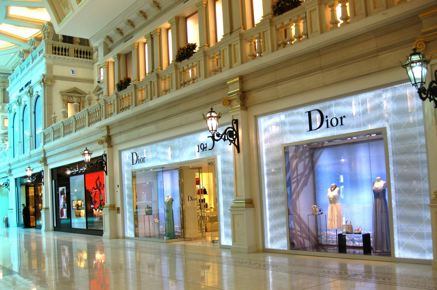
Fancy Shopping DohaIf you like high-priced designer names, Doha is a shopper’s paradise. In the desert climate, air conditioned malls provide not only great shopping but welcome relief from the heat. The best products offered by upscale designers from around the world are available at the Royal Plaza, City Center Doha, Landmark, The Mall, the newer Villaggio Mall, and the soon to-be-opened shopping complexes on The Pearl, a large development built on an island of reclaimed land.
The local shopping areas are called souqs which are frequently organized around what they sell. The Gold Souq is off Grand Hamad Street. Souq Al-Jabor on Al Ahmed Street focuses on leather goods.
Souq Waqif, the large souq, has a mix of tourist curios, Arabian swords and knives, native dress, beads, spices, perfume, clothing, falcons, out-door coffee shops, and restaurants. The location has been a market for hundreds of years. A reconstruction project begun in 2004 by the Emir, Sheik Hamad, the souq authentically recreates the look of the site when it was the market where Bedouins, pearl divers, and local artisans sold their goods. Building a new complex to look traditional could have a Disney-touch, but the Emir was determined to use native materials and traditional designs. As a result, locals and tourists have embraced the new Souq Waqif and pack its narrow alleyways at night.
Unfortunately in Qatar, where there is little native industry, most trinkets and curios aren’t produced locally. You’ll see goods from Middle Eastern countries such as Egypt, Jordan, Syria, and Morroco, or from India and China. Even the famous pearl divers are long gone, and today pearls come from Japan and China.
NIGHTLIFE
Souq WakifUnlike Dubai which has a Vegas-like atmosphere, life in Qatar is more subdued. Most Qataris and the expats who work in Doha do their entertaining at home, while locals tend to frequent hotel clubs and bars where alcohol is available.
The Ritz-Carlton’s Admiral’s Club has a terrace that benefits from a cooling sea breeze. Also at the Ritz-Carlton, Habanos is a cigar bar where you can enjoy sitting in plush leather chairs, sampling a good selection of fine liquor.
If you want to watch sports on TV while drinking a few beers, try Aussie Legends in the Rydges Plaza Doha or Garveys in the European Family Club on Al Aziziyi Street. The Four Seasons’ Library Bar & Cigar Lounge has a good wine list and an excellent selection of cocktails.
Be forewarned, the prices at the Four Seasons are downright scary. You’ll need to be oil-rich just to have a couple of perfect Manhattans and a snack.
OUTDOOR ACTIVITIES
In the summer months, the temperatures push past 120 degrees and the humidity keeps pace, so Doha isn’t a city to visit in June, July, August, or September unless business demands it. In the fall and winter months, the temperatures are moderate and, at times, downright chilly.
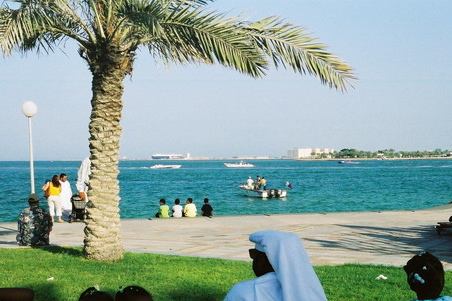
Doha CornicheWalking along the Corniche, the seafront promenade, is one of the great pleasures of Doha. The view is terrific although in some spots the traffic and construction noise detract from the effect. There aren’t public beaches for sunbathing. The Ritz-Carlton’s Sharq Village & Spa has a small man-made beach for guests but it faces the port and doesn’t have the best view. In a few years the Emir plans to relocate the port facility to better exploit the natural beauty of the bay.
If you want to get a view of the city from the water, tours are offered on the Arabian wooden sailing boats, dhows.
Being inside one new building after another, it’s possible to forget that you’re in the Middle East. A trip outside the city helps remind you where you are.
When expats working in Doha want to take a break from their jobs and the noise of 24-hour a day construction, they head south of the city to the sand dunes and the Inland Sea where they can take camel rides, have dune buggy tours of the desert, and enjoy barbecues on the beach.
For our trip to the dunes, we hired a guide from Gulf Adventures who gave us a tour of the dunes that included his driving straight down a steep dune as fast as he could. At first scary, we loved them so much, we’d egg him on to find another big dune and dive bomb to the bottom.
Camel RideHe encouraged us to take a camel ride. (I had my picture taken so I could show my sons that I’m not really as square as they think.) Enjoying a glass of sweetened mint tea, we finished the tour sitting under a tent next to a sand dune swapping stories.
SPORTS
To make Doha a destination in the Arab world, the Emir made sports a priority. The staging of the Asian Games in December, 2006 at the Aspire Zone announced to the world that Doha was a world-class sporting venue.
And if you are a horse racing fan, you already knew that.
The Arabian horses bred and trained in Qatar are renowned in the Arab world. Sheikh Hamad din Ali Al Thani’s equestrian complex Al Shaqab showcases the talents of purebred Arabian horses as do the Thursday races at the Racing & Equestrian Club (October to May).
Although not as elegant, go to Al Sheehaniya Camel Race Course to see the very popular camel races.
Given the heat of the Gulf, maintaining grass is a difficult and expensive proposition. Even the small patches of grass that decorate traffic islands require a thorough soaking three to four times a day during the summer. So it is amazing that Doha actually has a golf course, the 18-hole Doha Golf Club. Just as improbably, there is also one ice skating rink at Winter Wonderland at the City Centre Mall.
VISIT DOHA NOW OR IN FIVE YEARS?
If you have business in Qatar, this is an exciting time. The city changes every day with new and dynamic projects. Because the Emir took a less frenetic approach to development, it looks as if Qatar will weather the global economic slowdown more gracefully than other places such as Dubai.
To get the full benefit of what Doha offers the traveler, it might be best to wait awhile. Within the next several years the major construction projects will be completed.
The new international airport will have opened. The port will have been relocated, giving the new luxury hotels and office high-rises unobstructed views of the Gulf. In that time the transportation system will have expanded and more restaurants will have opened. New museums like the National Museum of Qatar, designed by Jean Nouvel, will be open. Robert De Niro will have launched the Tribeca Film Festival in Doha.
When all that has been done, Sheik Hamad bin Khalifa al-Thani may have achieved his vision of Qatar as a cultural center for the Arabic world and as a bridge between east and west.
Headed to the Middle East? Check out these articles: